Cloud DevOps Proxy Support: Secure, Scalable & Enterprise-Ready Connectivity for Modern DevOps Teams
With Cloud DevOps Proxy Support, CI/CD pipelines, cloud deployments, and enterprise DevOps environments can all connect safely, legally, and quickly. Find out about architecture, best practices, and how to use them in the real world.
Cloud Devops Proxy Support
5/8/20243 min read
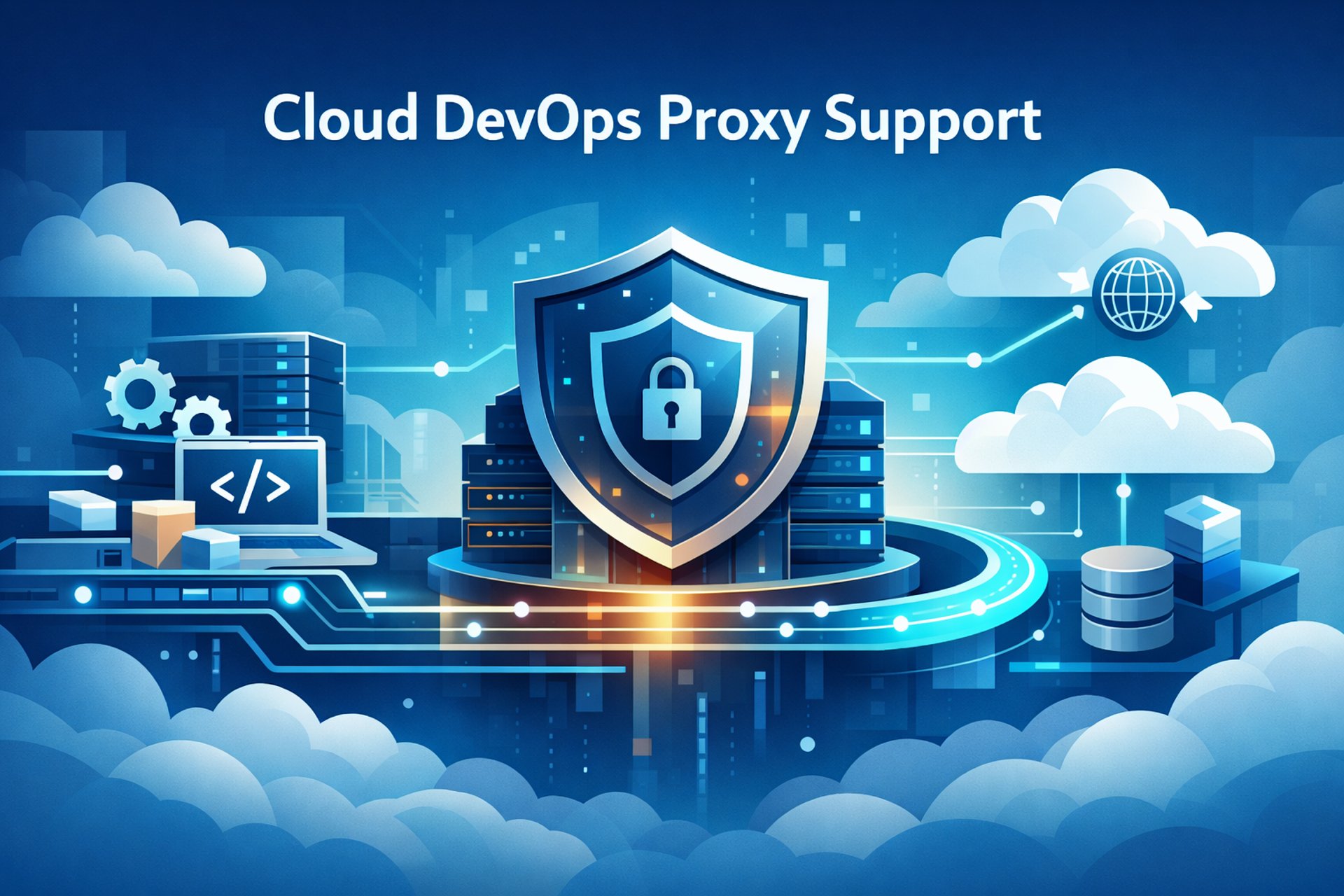
Modern DevOps environments are built for speed, automation, and continuous delivery. However, as CI/CD pipelines expand across multi-cloud and hybrid infrastructures, unmanaged network traffic becomes a growing risk. Build agents connect to external repositories, deployment scripts access third-party APIs, and containers frequently pull artifacts from public registries. Without proper traffic control, these connections can introduce security vulnerabilities, compliance violations, and performance bottlenecks.
Cloud DevOps Proxy Support provides a structured and secure gateway for managing outbound and inbound traffic across cloud ecosystems. By implementing centralized proxy architecture, organizations gain better visibility, enhanced security controls, and improved pipeline reliability. For enterprises operating in AWS, Azure, or hybrid cloud environments, proxy-enabled DevOps is no longer optional—it is foundational.
Why DevOps Teams Need Proxy Support
1. Security Risks in Unrestricted Pipelines
DevOps workflows often require outbound internet access for:
Pulling dependencies from public repositories
Accessing container images
Connecting to SaaS services
Performing API integrations
Without Cloud DevOps Proxy Support, these connections bypass centralized monitoring, increasing exposure to:
Malware-infected packages
Unauthorized downloads
Credential leakage
Data exfiltration
A properly configured proxy enforces outbound filtering, domain restrictions, and IP whitelisting to ensure only approved destinations are reachable.
2. Compliance & Governance Requirements
Organizations in regulated industries—such as finance, healthcare, and government—must comply with frameworks like:
SOC 2
ISO 27001
GDPR
HIPAA
Audit readiness requires clear traffic logs and traceability of external communications. Cloud DevOps Proxy Support ensures:
Centralized logging of outbound traffic
Controlled internet access policies
Enforcement of security baselines
This structured approach simplifies compliance audits and reduces risk exposure.
3. Performance & Reliability Challenges
Unmanaged traffic routing can cause:
Pipeline delays due to network latency
Intermittent build failures
Inconsistent artifact downloads
By routing traffic through optimized proxy servers, organizations can implement:
Caching mechanisms for frequently accessed packages
Controlled bandwidth allocation
High-availability proxy clusters
The result is faster and more predictable CI/CD execution.
How Cloud DevOps Proxy Support Works
Cloud DevOps Proxy Support acts as an intermediary between DevOps workloads and external networks. Instead of allowing direct internet access, build agents and deployment tools communicate through a secured proxy gateway.
Key Components:
Secure Routing Layer
Centralized outbound traffic control
IP-based access policies
Domain filtering
Authentication & Authorization
Role-based access control
Integration with identity providers
Token-based authentication
Traffic Inspection & Monitoring
TLS inspection (when required)
Real-time traffic analytics
Suspicious activity detection
Logging & Reporting
Audit-ready logs
Compliance reporting dashboards
Historical traffic tracking
This architecture strengthens security posture without slowing development velocity.
Integration with CI/CD Tools
Cloud DevOps Proxy Support seamlessly integrates with common DevOps platforms such as:
Jenkins
GitHub Actions
Azure DevOps
GitLab CI
Bitbucket Pipelines
Configuration typically involves:
Setting HTTP/HTTPS proxy variables on build agents
Updating container runtime proxy settings
Configuring artifact repositories to route through proxy
Once implemented, pipeline traffic becomes controlled, monitored, and compliant.
Best Practices for Implementing Cloud DevOps Proxy Support
To maximize effectiveness, follow these best practices:
1. Use Dedicated Proxy Infrastructure
Avoid mixing application and proxy workloads. Deploy separate, scalable proxy instances.
2. Implement Least-Privilege Policies
Only allow access to required domains and repositories. Restrict broad internet access.
3. Enable Redundancy
Deploy high-availability proxy clusters to prevent pipeline downtime.
4. Monitor Continuously
Track logs for anomalies, unusual traffic spikes, or unauthorized attempts.
5. Regularly Update Policies
Review and refine proxy rules as infrastructure evolves.
A well-maintained proxy solution strengthens both security and performance.
Real-World Use Cases
Case Study 1: Financial Services Enterprise
A large financial institution implemented Cloud DevOps Proxy Support to meet strict compliance standards. Prior to implementation, direct internet access from build agents posed audit concerns. After deploying a centralized proxy:
Internet traffic became fully logged
Security incidents decreased by 40%
Audit preparation time was reduced significantly
The organization achieved improved governance without sacrificing development speed.
Case Study 2: SaaS Startup Scaling Globally
A fast-growing SaaS company experienced CI/CD failures due to inconsistent package downloads. By implementing proxy caching and traffic control:
Pipeline failures dropped by 35%
Build times improved
Network visibility increased
Cloud DevOps Proxy Support helped them scale confidently while maintaining operational stability.
Key Benefits of Cloud DevOps Proxy Support
Enhanced security posture
Regulatory compliance alignment
Centralized traffic visibility
Improved pipeline reliability
Optimized network performance
Reduced risk of external threats
For enterprises embracing automation and rapid deployment, secure connectivity is essential.
Conclusion
DevOps accelerates innovation—but without proper network governance, it can introduce significant risks. Cloud DevOps Proxy Support delivers the balance between agility and control. By routing CI/CD traffic through secure, monitored gateways, organizations protect sensitive systems while maintaining development velocity.
As cloud environments grow more complex, structured proxy architecture becomes a strategic investment rather than a technical afterthought. Enterprises that adopt Cloud DevOps Proxy Support gain not only stronger security but also operational clarity, compliance confidence, and scalable infrastructure readiness.
If your organization is building modern CI/CD pipelines, now is the time to implement a secure proxy strategy that supports long-term growth.